· on this page
The phrase "agentic AI" sat in research papers until 2024, then became a category Anthropic could ship an SDK against, OpenAI could ship a consumer product against (Operator), and a generation of startups could raise on. By April 2026 there are real products, real customers, and real revenue, plus a much wider field of companies whose "agent" is closer to a loop with tool calls. This guide cuts through to the ten that actually matter, sorted into the three working categories.
For the technical comparison of agent SDKs and frameworks you'd build with (Claude Agent SDK, OpenAI Agents SDK, LangGraph, CrewAI, n8n, AutoGen), see our AI agent platforms guide. This guide covers the companies, including pure-play agent startups that don't sell an SDK at all.
Foundation-model providers
The four companies that ship the underlying models also ship their own agent SDKs and (increasingly) finished agent products. They have a moat the framework companies can't match: the model. They have a moat the pure-plays can't match: distribution.
Anthropic
What they ship: Claude Opus 4.7 / Sonnet 4.6 / Haiku 4.5, the Claude Agent SDK, Claude Code, Claude Desktop, and Managed Agents (a hosted-agent product launched in early 2026).
Strength: the most reliable tool-use of any frontier model in third-party evaluations through 2025-2026. Long context (200K standard, 1M extended on Opus). Native MCP support, which means the agents can consume any of the 11,000+ MCP servers in the wild without per-platform integration. Claude Code is the de-facto agentic coding environment for serious developers.
Where it shows up: Cursor, Zed, Claude Code, GitHub Copilot (one of the underlying models), most production agentic-coding tools. Default choice when reasoning quality matters more than per-token cost.
OpenAI
What they ship: GPT-5.4 / 5 / mini / nano, the OpenAI Agents SDK (built on the Responses API), Operator, ChatGPT Agents, AgentKit, and the broader ChatGPT consumer surface.
Strength:the consumer reach. ChatGPT still has the largest paid-user base among AI products. Operator (browser-controlling agent) and ChatGPT Agents (task-running consumer agents) are real products real people use, not just demos. Native image generation, voice, and code interpreter inside the same agent surface are advantages Claude doesn't match.
Where it shows up: ChatGPT Operator, Codex CLI, Microsoft Copilot products, anything where multimedia or voice is part of the agent flow.
What they ship: Gemini 3.1 Pro / Flash / Flash-Lite, Gemini 2.5 Pro (2M context), Vertex AI Agent Builder, Gemini Agents inside Workspace, and Project Mariner (browser-controlling agent).
Strength: the longest context windows on the market (2M on Gemini 2.5 Pro, 1M everywhere else), native multimodal handling (video and audio at API level, not bolted on), and integration with everything already in Google Cloud. For enterprise customers already on Workspace or GCP, the friction to adopt is roughly zero.
Where it shows up: inside Google Workspace, Vertex AI customer deployments, Android Assistant, Gemini Code Assist. Less third-party ecosystem than Claude or OpenAI but big presence inside the Google estate.
Microsoft
What they ship: Copilot (across Office, GitHub, Edge, Windows), Copilot Studio (low-code agent builder for enterprises), AutoGen (open-source multi-agent framework), Semantic Kernel (LLM orchestration), and a long-running strategic relationship with OpenAI as the underlying model provider.
Strength:distribution into the enterprise. Every Fortune 1000 company already has Microsoft 365 and Active Directory; agents that show up inside that surface have a deployment path competitors don't. AutoGen is also the most-used multi-agent research framework after CrewAI.
Where it shows up:Office Copilot, Copilot Pages, Copilot Studio deployments, GitHub Copilot. Less interesting if you're not in the Microsoft ecosystem.
Pure-play agent startups
Companies whose entire product is an agent (or a small set of agents). They don't sell an SDK; they sell finished agents you deploy or integrate. Higher valuations, narrower scope, faster time-to-value.
Sierra
Bret Taylor's post-Salesforce company, focused on customer-experience agents. Raised at a $4B valuation in early 2026 on real revenue from large enterprise CX deployments. The pitch: the agent replaces tier-1 support for ~70-80% of inbound customer contact, with a guardrails layer that knows when to escalate.
Why it matters: Sierra is the cleanest example of an agent product that customers measurably prefer (lower handle time, higher satisfaction in some deployments) to a human alternative for the right contact types. The business model also actually maps to a measurable ROI, cost-per-resolution beats human staffing for high-volume support categories.
Cognition (Devin)
Cognition's Devin is the most ambitious autonomous coding agent on the market: meant to take a ticket, plan the work, write the code, run the tests, and open a PR with minimal human babysitting. Reception in early 2024 was mixed (the demo benchmark numbers didn't match independent attempts). By 2026 the product has matured meaningfully and the company has a real revenue trajectory.
Why it matters: if the autonomous-coding-agent thesis holds (model takes a Linear ticket, ships a PR), Devin or its successors are the platform shape. If it doesn't hold, copilots like Cursor and Claude Code take the territory. The 2026-2027 window is when this gets settled.
Lindy
Personal-agent platform. The pitch: you describe a workflow in natural language ("every time someone emails me about [X], do [Y]"), Lindy builds it, runs it, and you supervise the exceptions. Targets solo operators and small teams more than the enterprise deployments Sierra targets.
Why it matters: Lindy is the bet that consumer-grade agent UX, the closest thing to "just tell it what you want", becomes a default surface. If they're right, the win goes to whoever solves UX, not to whoever has the best underlying model. Open question whether they pull it off; the prototype works for obvious workflows but the long tail is where these products usually break.
Framework and tooling companies
The middle layer: companies that sit between the model and your code, providing orchestration, observability, and provider-portability. Smaller moats than the foundation-model providers, broader market than the pure-plays.
LangChain
The framework company. LangChain (the original library), LangGraph (the production-grade state-graph framework most teams use in 2026), LangSmith (observability and eval), and LangServe (deployment). Used by something like 60% of production agent deployments outside the vendor SDKs, by their own estimate; smaller share inside vendor-SDK shops.
Why it matters: LangGraph is currently the most provider-portable way to ship a production agent. If you want to swap Claude for GPT-5 mid-deployment without rewriting, LangGraph is the path. The tradeoff is more boilerplate and a steeper learning curve.
CrewAI
Role-based multi-agent orchestration framework. The conceptual fit: when your problem decomposes naturally into specialists (a researcher agent, a writer agent, a critic agent), CrewAI's abstraction reads more cleanly than LangGraph. Open-source core; commercial offering for hosted runs and enterprise features.
Why it matters: CrewAI dominates a specific shape of agent problem (role-based workflow). For the right shape of problem, it's significantly faster to build than a LangGraph equivalent. For the wrong shape (single agent, complex flow control), it's the wrong fit.
How to pick (the short version)
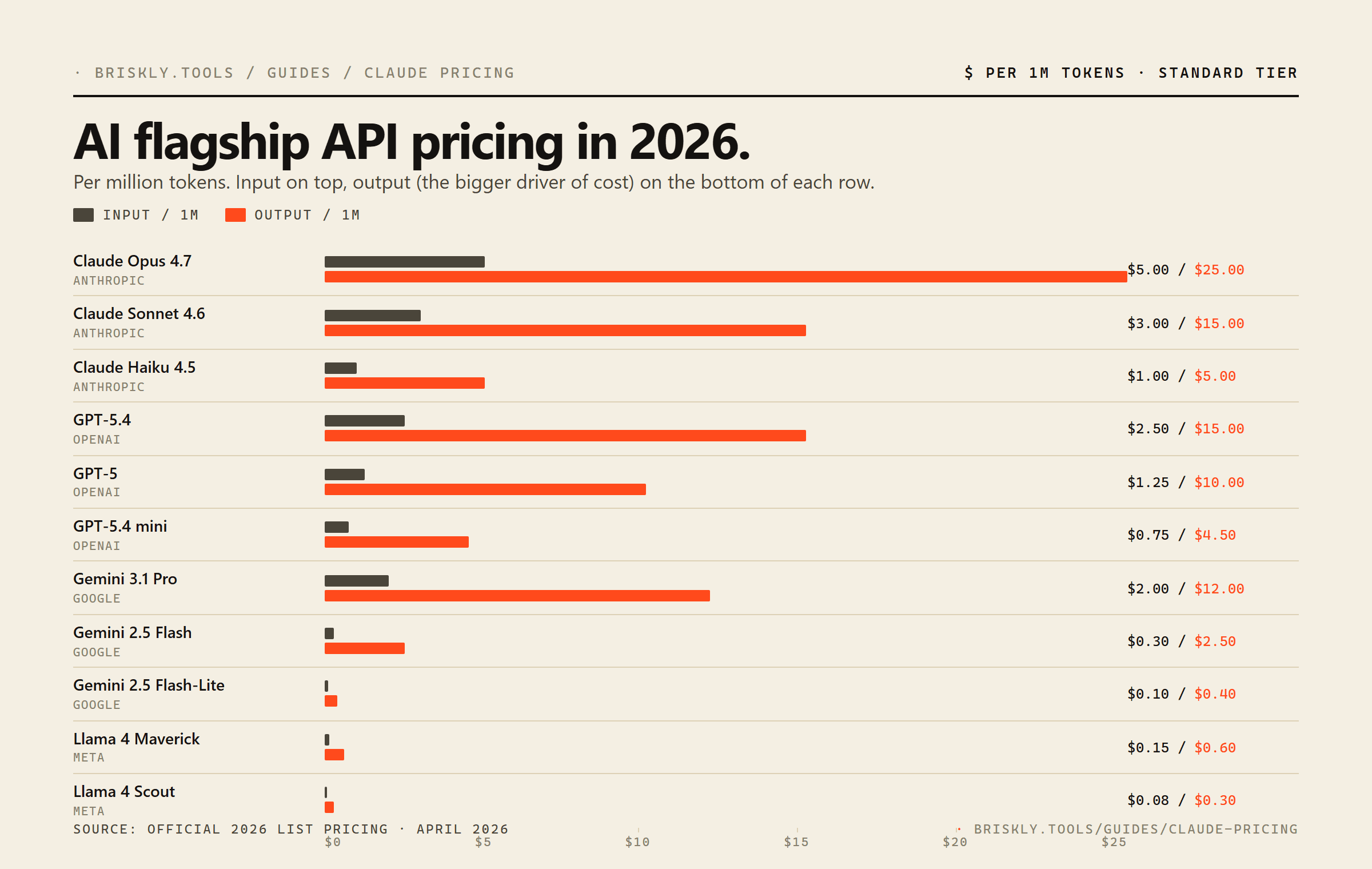
For the deeper picking framework keyed to specific workload shapes (flowchart-shaped, role-shaped, reasoning-heavy, etc.) see our AI agent platforms guide. For the cost math beneath any of these picks, the Claude pricing guide and the LLM token counter run the actual numbers.
FAQ
What is an agentic AI company?
A company building products where the LLM doesn't just answer one prompt at a time, it plans multi-step actions, calls tools autonomously, holds state across turns, and runs without a human in every loop. The category splits three ways in 2026: foundation-model providers shipping their own agent SDKs (Anthropic, OpenAI, Google, Microsoft), pure-play startups whose entire product is an agent (Sierra, Cognition, Lindy), and framework / tooling companies that sit between the model and your code (LangChain, CrewAI). All three are real businesses; which one you 'buy from' depends on whether you want the model, the agent product, or the orchestration layer.
Who is the leader in agentic AI right now?
There isn't a single leader. Anthropic leads on agent reliability for code and reasoning workloads (Claude Opus 4.7 + Agent SDK). OpenAI leads on consumer-facing agents (Operator, ChatGPT Agents, AgentKit). Google leads on enterprise integration (Vertex AI Agent Builder + Workspace). Among pure-plays, Sierra is the highest-valued at $4B in early 2026 because customer-experience agents have a clear ROI story; Cognition (Devin) leads in software-engineering autonomous agents. The 'leader' depends on what kind of agent you actually need.
Can I build my own agent or do I need to buy one?
Both work. If you're a developer with a specific workflow, building with the Claude Agent SDK or LangGraph is a 1-3 day project for a working v1. If you're a non-developer or your workflow is standard (customer support, sales outreach, internal Q&A), buying from Sierra / Lindy / a vertical-specialist company is faster and ships with the eval and observability layer included. The break-even is usually around the point where your workflow has more than three branching tool-call paths; below that, build it.
Are agentic AI companies a good investment?
We don't give investment advice. As a category, the major foundation-model providers are obviously the safest bets and are not standalone investments anyway (Anthropic via Amazon / Google strategic, OpenAI partially via Microsoft). Pure-play agent startups are higher-risk: Sierra, Cognition, Adept (acquired by Amazon), and /dev/agents have raised at premium valuations on growth that hasn't been independently verified yet. Framework companies (LangChain, CrewAI) have the smallest moats but the broadest market reach. Caveat emptor.
How is this different from your AI agent platforms guide?
The platforms guide covers the technical SDKs and frameworks you'd build with: Claude Agent SDK, OpenAI Agents SDK, LangGraph, CrewAI, n8n, AutoGen. This guide covers the companies behind those products plus the pure-play agent startups (Sierra, Cognition, Lindy, etc.) that don't sell an SDK at all, they sell finished agents. Think of one as 'how to build' and this one as 'who's building.'
What about niche agentic AI companies for [my industry]?
Almost every vertical has a 2026 agent startup: Glean for enterprise search, Harvey for legal, Hippocratic AI for healthcare, Decagon for support, Hebbia for finance research, EvenUp for personal injury, Cursor for code (more of an IDE-first product but increasingly agentic). The list moves fast; if you're picking one for a specific workflow, the SERP query 'best agentic AI for [vertical]' surfaces the current top 3-5 within minutes. We're keeping this guide to the cross-cutting names worth tracking everywhere.
Is the agentic AI hype real or a bubble?
Both. The technology is real, agents reliably do work that wasn't possible 18 months ago, and customer-experience use cases are saving meaningful labor cost. The hype is also real, valuations have outpaced revenue, churn after pilot deployments is high, and many vertical agents will fold or get acquired in 2026-2027 as customers consolidate to the survivors. The pattern from prior tech cycles holds: the technology shift is durable, the company shake-out is brutal, and the survivors will look obvious in hindsight.
Related
- · AI agent platforms in 2026, the SDK / framework comparison this guide is the "who builds it" counterpart to.
- · Claude pricing in 2026, compared, the cost math beneath any agent platform.
- · Claude vs ChatGPT vs Gemini, picking the underlying model.
- · MCP server primer, the protocol every agent platform now speaks.
- · LLM token counter, per-prompt cost across every flagship.
- · Briskly AI hub, every AI resource in one place.